Posts

A Chronicle of Dhebar Lake: History, Ecology, and Significance

Image
Dhebar Lake, also known as Jaisamand Lake, stands as a testament to the ambition and vision of 17th-century Mewar. Located in the Udaipur district of Rajasthan, India, this Artificial Lake holds a significant place in history, ecology, and tourism. While currently facing challenges due to fluctuating rainfall, its historical importance and ecological richness continue to attract attention. Commissioned by Maharana Jai Singh in 1685, Dhebar Lake was conceived to address the critical need for irrigation in the southeaster reaches of Mewar. Following in the footsteps of his father, Maharana Raj Singh I, who created Rajsamand Lake, Jai Singh dammed the Gomati River , a small waterway near Udaipur. The resulting embankment, standing at an impressive 36.6 meters, birthed a vast reservoir initially spanning 36 square miles. This feat of engineering earned Dhebar Lake the distinction of being the world's largest artificial lake at the time, a title it held until the construction of the A...

Shat Tila Danam: A Sacred Ritual of Purification and Ancestral Connection

Image
In the tapestry of ancient Indian traditions, woven with threads of spirituality, cosmology, and social customs, lies the ritual of Shat Tila Danam. This auspicious observance, deeply rooted in Hindu scriptures and traditions, centers around the use of sesame seeds (Tila) and a series of six distinct acts aimed at purification, expiation of sins, and connecting with one's ancestors. Often viewed as a continuation or extension of the Bhaimyekadashi observance, Shat Tila Danam embodies a profound understanding of the interconnectedness between the individual, the cosmos, and the lineage. The history of Shat Tila Danam is shrouded in the mists of time, with its origins traceable to Ancient Hindu Texts, particularly the Brahma Purana, which explicitly mentions the sacred Nature of this Ritual. While pinpointing a precise date of origin remains elusive, the presence of sesame seeds in various Ancient Rituals and their symbolic significance in Hindu cosmology suggest a long and evolvi...

Costumes of Ancient India: A Tapestry Woven Through Time

Image
The costumes of ancient India offer a fascinating glimpse into the lives, beliefs, and societal structures of the people who inhabited the subcontinent over millennia. Unlike modern trends dictated by fleeting fashion, Ancient Indian Attire was deeply rooted in tradition, climate, and practical considerations. Garments were primarily unstitched, relying on ingenious wrapping and draping techniques to create diverse and elegant styles. Literary Sources, including the Vedas, Brahmanas, Sutras, Epics, and Puranas, provide invaluable insights into the evolution of clothing materials, designs, and the symbolic significance of adornment throughout this period. The Vedic Age: Simplicity and Functionality The earliest textual references to clothing appear in the Vedic Literature, dating back to around 1500 BCE. The Rig Veda mentions basic garments like adhivastra (an outer veil), kurlra (a head-dress or ornament), and pratidhi (a part of a woman's dress). Linen and wool were the pr...

Puranic Sources of Ancient Indian History: Unveiling the Past Through Literature

Image
Ancient Indian history, a rich tapestry woven with threads of mythology, philosophy, and historical accounts, owes a significant debt to its vast literary heritage. Among these Sources the Puranas, often hailed as the "real histories" of ancient India, stand out as invaluable tools for reconstructing the past. Beyond them, other Vedic and post-Vedic literature like the Brahmans, Upanishads, Vedangas, Sutras, and Epics contribute significantly to our understanding of Ancient India. This article explores the importance of these Puranic and related literary sources in illuminating the historical, socio-economic, and religious landscapes of ancient India. The Puranas, meaning "ancient" or "old," are a collection of encyclopaedic texts covering a wide range of topics, from cosmology and mythology to genealogies of kings and the creation of the universe. Numbering eighteen major Puranas and an equal number of Up-Puranas (minor Puranas), they represent a unique...

The Gaze from the East: Chinese Travelers and Their Accounts of Ancient India

Image
For centuries, India has captivated the world with its rich tapestry of culture, philosophy, and history. While indigenous literature and archaeological discoveries have provided invaluable insights into India's past, accounts from foreign travelers offer a unique perspective, enriching our understanding of its societal, economic, and religious landscape. Among these, the chronicles of Chinese Buddhist pilgrims stand out as particularly significant, providing detailed glimpses into India from the 4th to 8th centuries CE. Driven by a deep reverence for Buddhism, these travelers, most notably Fa Hien (Faxian), Hiuen Tsang (Xuanzang), and I-Tsing (Yijing), embarked on perilous journeys to the Land of the Buddha, leaving behind invaluable records of their experiences. Their writings offer a crucial external perspective, complementing and sometimes challenging narratives derived from Indian sources. The journeys of these travelers were often arduous and fraught with danger. They trave...

Numismatic Treasures: Unveiling Ancient India's History, Society, and Politics Through Coins

Image
Coins, often unassuming metal discs, are far more than just a medium of exchange. For historians, archaeologists, and numismatists, they are invaluable time capsules, offering unique glimpses into the past. In the context of Ancient Indian Coins serve as vital primary sources, illuminating aspects of history, society, administration, and politics that would otherwise remain shrouded in mystery. Indeed, the numismatic finds discovered so far, crafted from copper, gold, silver, and their alloys, offer priceless materials for the restructuring of our understanding of ancient India. The period from 206 B.C. to 300 B.C., a relatively obscure era in Indian history, owes much of its clarity to the Abundance of coins discovered. Without these tangible remnants, our knowledge of this crucial transition period would be significantly limited. These coins, found in substantial numbers, provide insights into the personal lives of kings, their dates of succession, their military conquests, the pre...

Vinaya or Discipline in the Ancient Indian Army

Image
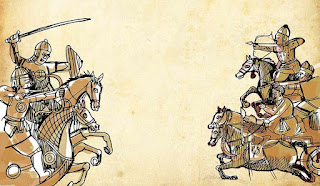
The concept of Vinaya , or discipline, played a crucial role in the functioning of the ancient Indian army. Beyond mere rules and regulations, Vinaya encompassed a broad standard expected from soldiers not only in camp and during marches but also in the heat of battle. It reflected an ideal of preparedness and resilience, such that a soldier was always ready to face reverses while engaging the enemy. This article explores the multifaceted nature of Vinaya, the selection of military leaders, the importance of self-discipline, and the rigorous training regimens that defined military life in ancient India. The Essence of Vinaya in Military Contexts In the ancient Indian military tradition, Vinaya represented more than obedience; it was about maintaining a high standard of behavior and readiness under various circumstances. Discipline was critical, especially when soldiers were encamped or on the move. A disciplined soldier was one who acted in accordance with a code of conduct that ...